

This week Microsoft offered voluntary buyouts to 60,000 employees, about 27% of its workforce, as AI leads to an efficiency push. A few days earlier, Barclays said it would cut 5,000 jobs in an AI efficiency push, and American Express said it’s cutting 5% of its workforce to “prepare for AI.”
And that’s just one week. Every day for the past few years has felt uncertain. There are layoffs every week, and there’s a new model killing startups every week.
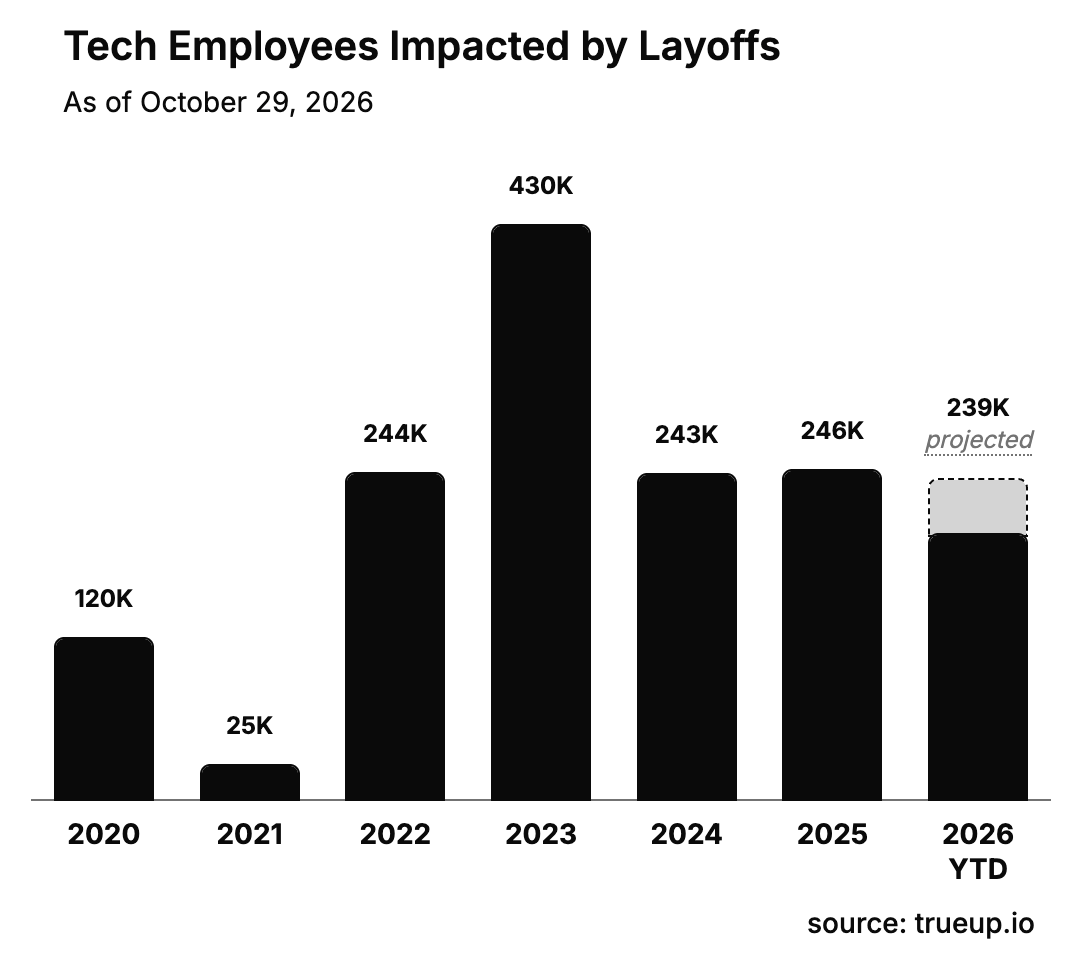
I’ve been working in tech for 20 years. First as a software engineer, then as a founder, and now as a full-time product manager. I’ve never felt this uncertain about where my career is going, or what my kids will be doing 10 years from now. So I made a video about it. This post is the short version.
Every 10 years or so, there’s a new Lego brick
I grew up in Taiwan, and I started building PCs in middle school. You could buy CPUs, motherboards and CD-ROM drives at the market, snap them together and get a working computer. I didn’t have to know anything about the circuits.
Years later, Ruby on Rails did the same thing for apps. Big components, no plumbing. You just had to know the framework and you could build a whole app. I tell the full story in the video, from Taiwan to my first startup.
Looking back, every 10 years or so there’s a new Lego brick:
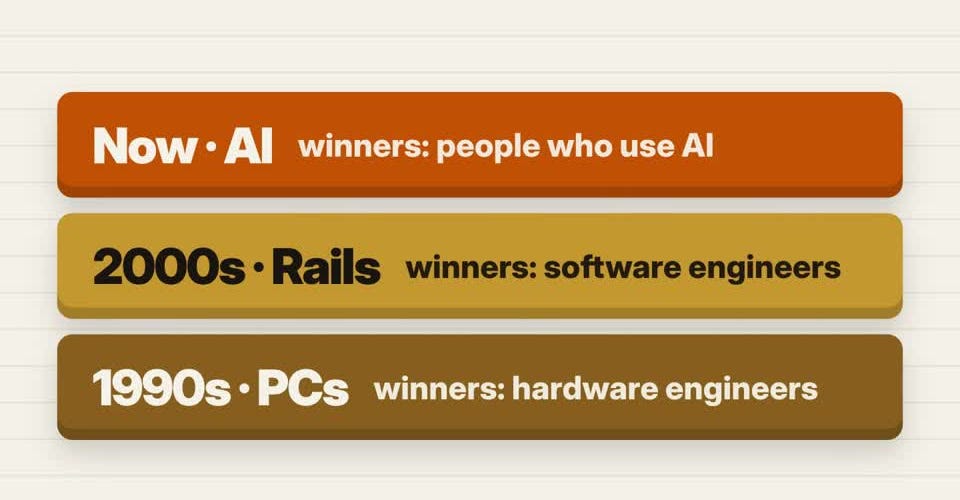
1990s, PCs: hardware engineers were super popular.
2000s, Rails: software engineers were the crown jewels of careers.
2010s, Mobile: continuation of software engineering bleeding into mobile tech.
Now, AI: the winners are people who know how to use AI to build things and get more done.
AI is just the next brick. It hides the circuits, the plumbing and the code, and gets you to the outcome faster.
The one skill that doesn’t change
The only skill that matters through all of this is critical thinking and problem solving.
Technology keeps changing. Hardware, software, mobile, and now AI. What stays the same is figuring out which problem is worth solving, then putting the pieces together to solve it.
I got a front-row seat this year
I built an AI app last year, Cal Autobot. You forward it any email and it puts the dates on your calendar. I shut it down the same weekend Meta launched Muse, its new AI agent. (I wrote about what Muse means for builders here.)
What actually killed my app surprised me, and it wasn’t people vibe coding their own version. This is the part of the video where it clicked for me, and I think it’s where a lot of jobs are heading too.
What I’d do this week
Start playing with AI and uplevel. You don’t have to chase every new tool. Pick one thing you do every week that you hate and hand it to AI. It could be research, it could be coding, or in my case, managing the kids’ calendar.
If you’re thinking about building something with AI, I go through the questions I ask myself first in the video at 9:16. The first one is whether an AI agent could do it, if not today, then in two weeks or a month. The second one is about who you’re really building for.
Where I land
I don’t know what we as professionals are going to do in the near future. I’m taking it one step at a time, building stuff on the side and playing with AI. But I’m optimistic, because every 10 years or so there’s a new brick, and it lets us build something better.
Watch the full video here. What’s one thing AI changed about your job this year? I’d love to hear from you in the comments.
Sources: Microsoft buyouts (CNBC, Oct 26, 2026) · Barclays job cuts (CNBC, Oct 22, 2026) · American Express job cuts (CNBC, Oct 23, 2026) · Layoff tracker